

In hot summer, tunnel doors in poultry houses are used frequently. For houses with tunnel doors installed on both the end wall and side walls, do the opening angles need to be the same? What is the appropriate angle for side wall tunnel doors? This article analyzes the impact of tunnel door opening angles on poultry farming in hot weather.
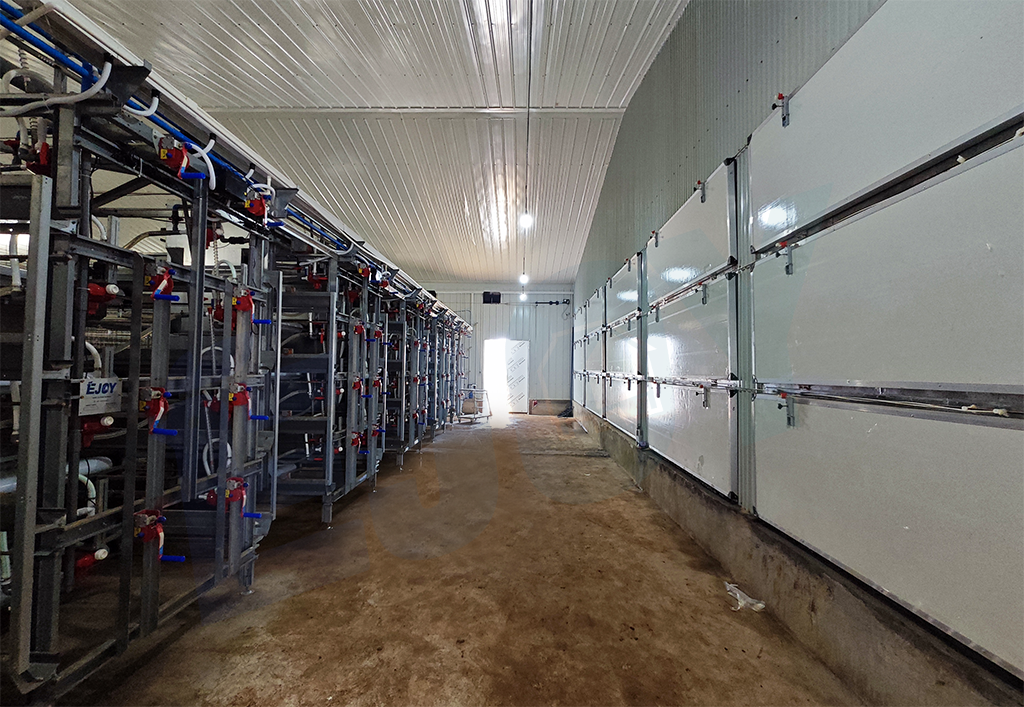
The original purpose of tunnel doors in closed poultry houses was to reduce heating costs during cold weather and minimize litter caking at the tunnel inlet area. In curtain-sided houses during cold weather, heaters near the curtain run almost continuously, while heaters elsewhere run only occasionally. Due to their high insulation value and airtightness, tunnel doors can significantly reduce heating costs.
As their use expanded, people found that tunnel doors also bring great benefits in hot weather. Farmers observed that tunnel doors create better air movement at the tunnel inlet area, eliminate "ventilation dead zones" near side walls at the doors, and improve airflow uniformity – all of which help reduce heat stress in hot weather.
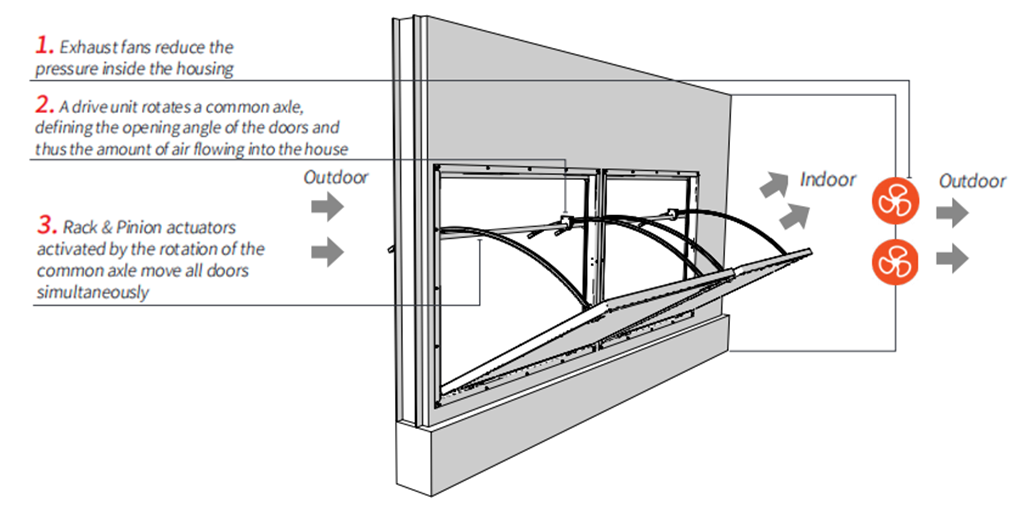
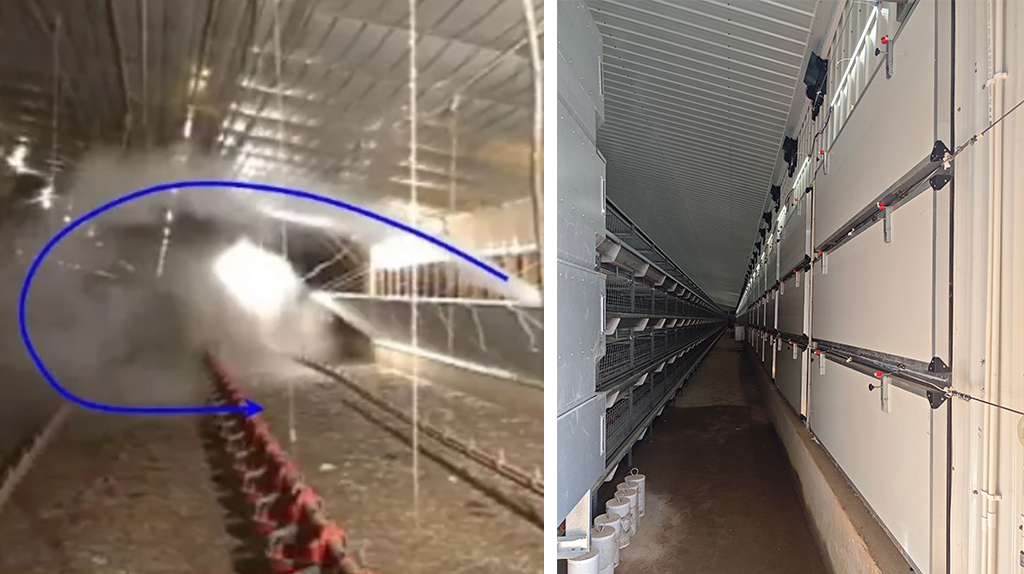
In houses using traditional curtains, air entering through side walls does not mix adequately; it moves directly to the center of the house, collides with air from the opposite side curtain, shows little diffusion, and then travels toward the tunnel fans. In houses with tunnel doors, the air movement pattern is different. Fresh air is directed by the angled opening of the side wall tunnel door toward the ceiling and travels along the ceiling until it reaches the center of the house, where it collides with air from the opposite side, then drops to the floor and returns to the side walls, forming a circular airflow path. This continues for about 30 m from the inlet, after which the air moves lengthwise toward the exhaust fans. This circular airflow path increases air movement in the tunnel inlet area, eliminates dead zones behind the inlet, and improves uniformity across the house cross-section.
Experiments have confirmed the benefits of the circular airflow path created by tunnel doors compared to traditional curtains. In two nearly identical tunnel-ventilated houses – one with tunnel doors that could only open to about 45°, the other with tunnel doors that could open fully parallel to the floor (similar to curtain airflow pattern) – measurements were taken with all fans running. Average air velocity measured at 15 cross-sections 18 m in front of the tunnel fans was nearly identical between the two houses: 3.78 m/s (±0.08 m/s). However, velocity uniformity across the cross-section differed greatly. In the 45° tunnel door house, the velocity difference between the center and 1.5 m from the side wall was less than 0.5 m/s. In the fully open house, the difference was about 1.25 m/s (Figure 3). This means birds near the side walls received less cooling than those in the center. When the fully open tunnel doors were closed to 45°, the cross-sectional velocity difference decreased to less than 0.5 m/s (Figure 4). Conclusion: starting air circulation immediately upon entry greatly improves velocity uniformity across the house.
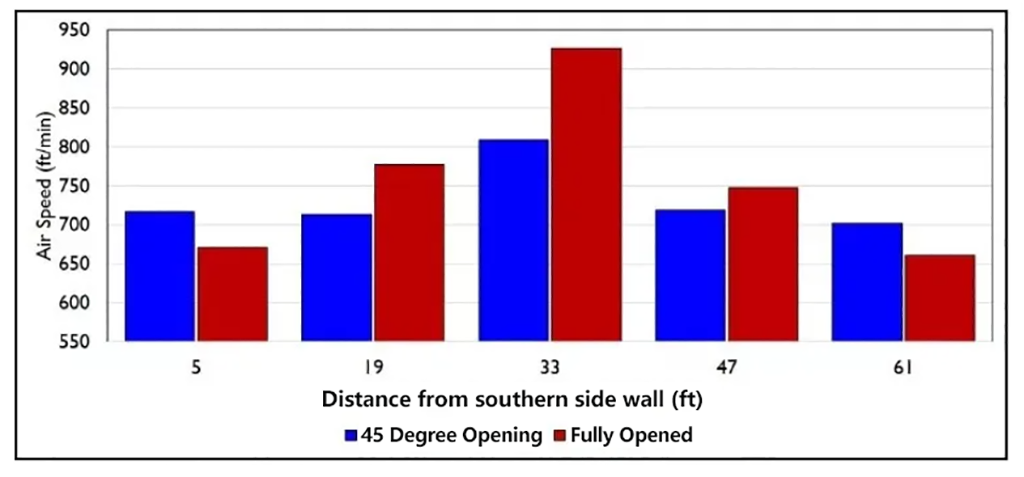
Figure 3: Comparison of cross-sectional airspeed in the poultry house with the tunnel door fully open versus opened at 45°
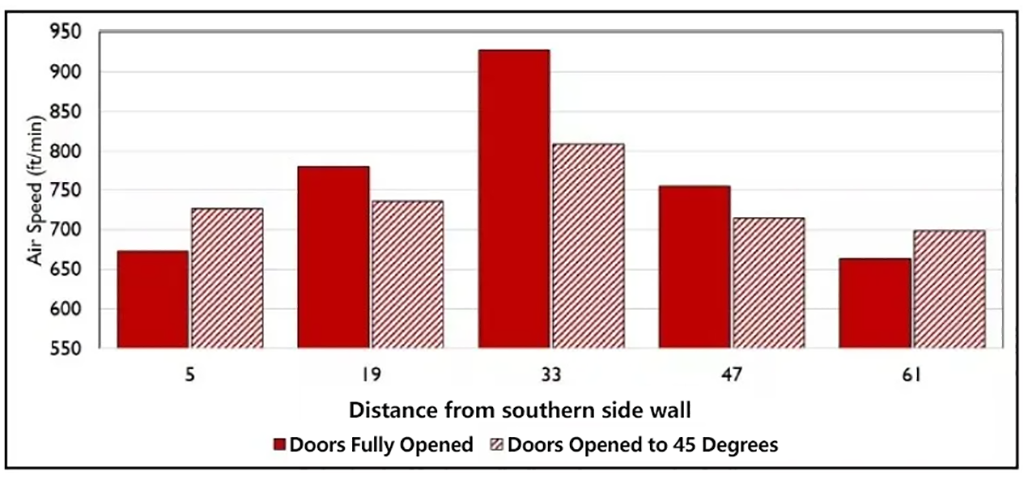
Figure 4: Comparison of cross-sectional airspeed in the same poultry house with the tunnel door fully open versus opened at 45°
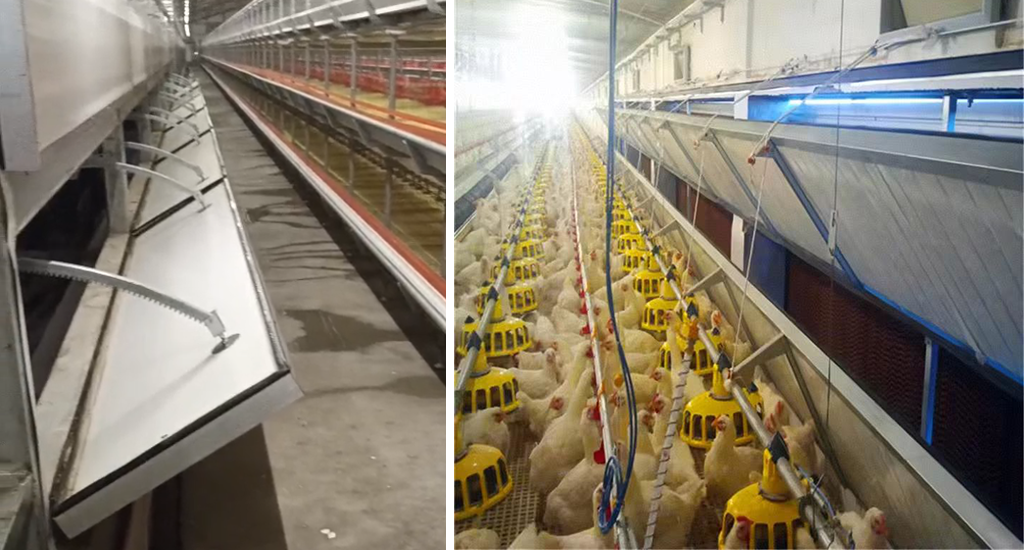
Figure 5: Excessive opening of the side wall tunnel door (>60°)
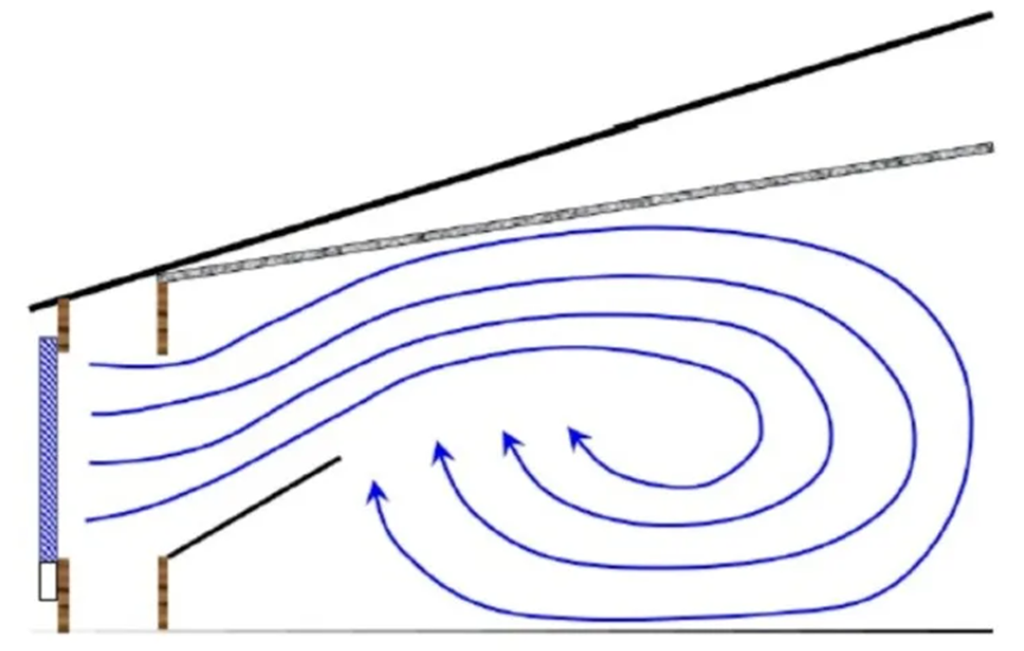
Figure 6: Airflow path caused by excessive opening of the side wall tunnel door
The opening angle of tunnel doors not only affects birds tens of meters away but also directly affects birds under the side wall tunnel doors. The larger the tunnel door opening, the greater the likelihood of creating a ventilation dead zone directly beneath the door (Figures 5, 6). This is because with a larger opening, it becomes harder for air to circulate back under the door.
People often assume that the inlet tunnel doors at the front must be opened the same amount as the side wall tunnel doors, and that maximum opening minimizes static pressure – which improves fan performance, increases house air speed, and lowers birds' effective temperature. Although reducing the tunnel door opening angle increases pressure, the benefits can be significant. For example, reducing side wall tunnel door opening from 1.5 m to 1.2 m leaves more space for air to circulate and return to the bottom of the side wall (Figures 7, 8). Additionally, when opening is reduced from 1.5 m to 1.2 m, inlet air velocity increases by about 25%, creating faster circulation in the tunnel inlet area and improving air movement.
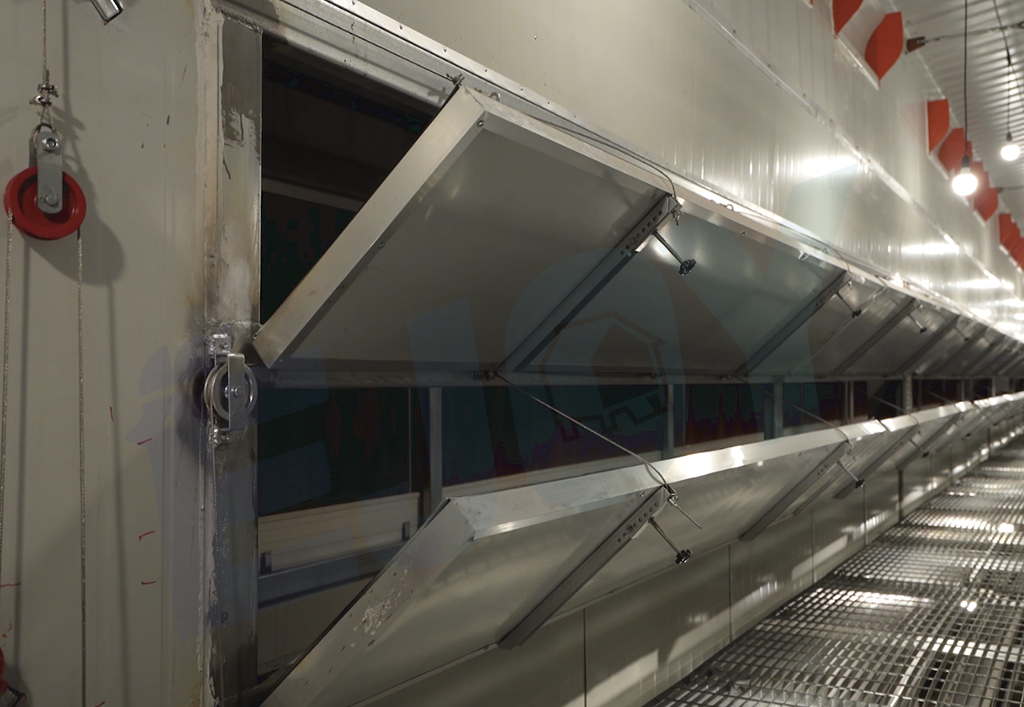
Figure 7: Side wall tunnel door opened at 45°
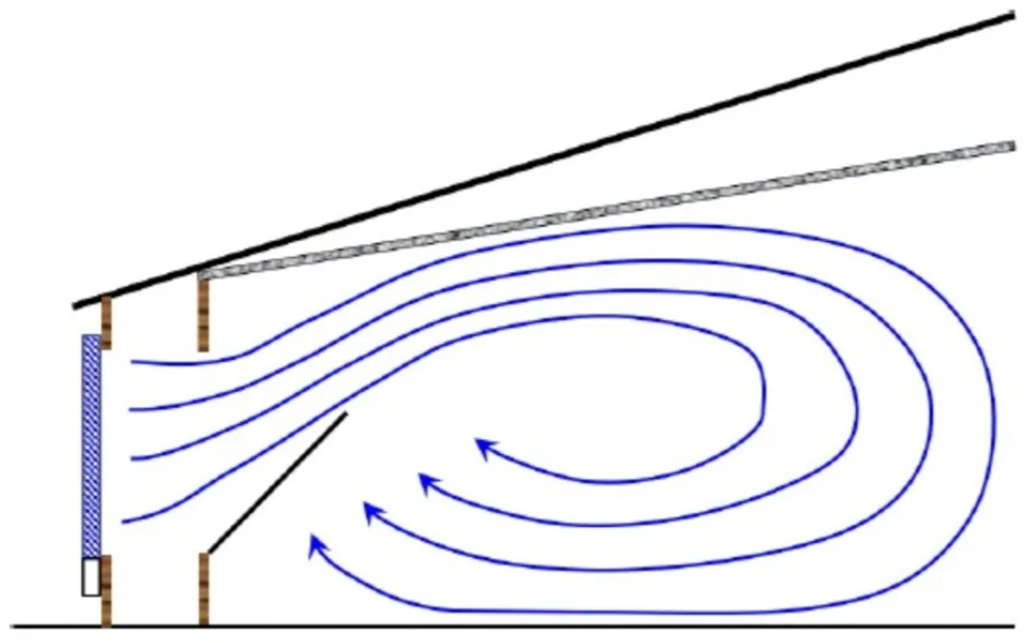
Figure 8: Airflow path generated by the side wall tunnel door opened at 45°
A study was conducted in three broiler farms to examine the effect of side wall tunnel door opening angle on static pressure and average house air velocity. All houses had cooling pads. Average house velocity was measured at 15 cross-sections 18 m in front of the fans, taking one average per minute for 15 minutes. During the same 15 minutes, static pressure was measured 6 m from the tunnel fans. With all tunnel fans running, measurements were taken at tunnel door angles of 60°, 45°, and 20°.
Reducing side wall tunnel door opening from 60° to 45° increased static pressure by only 1.5 Pa minimum, and decreased air velocity by less than 0.03 m/s (0.7%). This indicates that changing the angle from 60° to 45° in tunnel-ventilated broiler houses is unlikely to cause adverse effects (Table 1). Reducing the opening from 60° to 20° increased average static pressure by about 5 Pa and decreased average velocity by about 0.08 m/s – considered a very small change.
Table 1: Effect of side wall tunnel door opening angle on average airspeed and static pressure:
House Dimensions (m) | Cooling Pad Height (m) | Side Wall Tunnel Door Angle (°) | Air Velocity (m/s) | Static Pressure (Pa) |
15×152 | 1.5 | 60° | 2.96 | 31 |
45° | 2.94 | 33 | ||
20° | 2.88 | 36 | ||
20×183 | 1.8 | 60° | 3.04 | 34 |
45° | 3.02 | 36 | ||
20° | 2.96 | 38 | ||
14×142 | 1.5 | 60° | 3.59 | 42 |
45° | 3.57 | 43 | ||
20° | 3.53 | 46 |
The pressure drop across the tunnel doors is only a small fraction of the total static pressure generated by the fans – relatively insignificant. The pressure required for air to pass through the cooling pads, from the relatively small inlet cross-section, and along the house length (about 120 m from pad end to fan end) is much greater than the pressure drop across the side wall tunnel doors whether they are fully open or closed by 20%. The main contributor to static pressure is the high air speed inside the house; higher air velocity creates higher static pressure. Research shows that in floor-raised houses, air speeds between 3 m/s and 3.5 m/s produce static pressures of about 35 Pa to 43 Pa. Regardless of the tunnel door opening, static pressure generally remains consistent.
Another important benefit of reducing tunnel door opening is reducing the "ventilation dead zone" at the long cooling pad tunnel inlet. As pad length increases, the volume of air entering along the pad length becomes greater. In a house with a 30 m long pad, the air velocity through the pad at the far end is typically twice that at the near end. Although velocity differences near the fans are reduced (due to limited air flow near the tunnel fans), closing the side wall tunnel doors to a certain angle helps draw more air through the pads, thereby reducing the area of the dead zone.
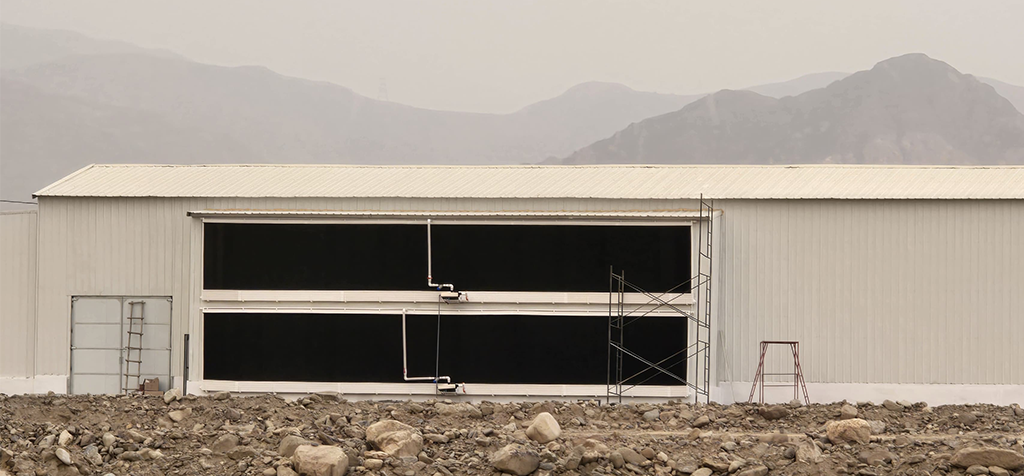
A study was conducted in a 20 m × 152 m house with two 38 m × 1.5 m cooling pads. The pads were about 0.9 m from the side wall, and 1.5 m high side wall tunnel doors were installed. With all sixteen 54-inch fans running, air velocity was measured at six positions along the pad length: 6 m, 10 m, 13.4 m, 17 m, 21 m, and 24 m from the end wall. Measurements were taken 5 m from the side wall and 0.6 m above the floor.
When side wall tunnel doors were fully open, air velocity 6 m from the end wall was 45% lower than at 24 m (324 ft/min vs. 529 ft/min) (Figure 10). Average velocity 50 ft from the fans was 671 ft/min (3.4 m/s), with static pressure of 40 Pa. When the side wall tunnel doors were closed by 1 ft (0.3 m, about 45°), velocity 20 ft from the end wall increased by nearly 100 ft/min (0.5 m/s), while velocity at the pad end increased by 10 ft/min (0.05 m/s). Although the largest change occurred near the end wall, velocity 68 ft (20.7 m) from the tunnel door end also increased by about 50 ft/min (0.25 m/s). Reducing the tunnel door opening increased static pressure by 2.5 Pa and decreased average house velocity by 1% (661 ft/min). The measurements show that closing side wall tunnel doors to about 45° helps reduce the dead zone near the end wall without adversely affecting overall house air velocity or bird cooling.
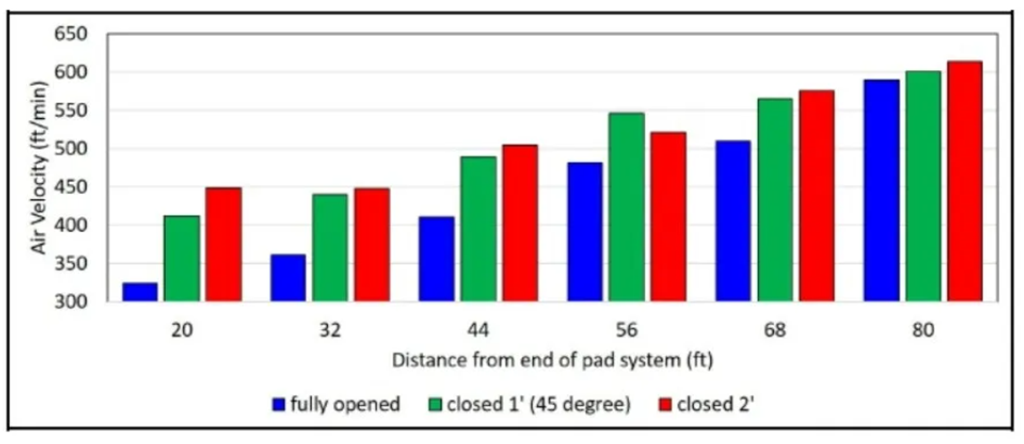
Figure 10: Airspeed distribution along the length of the wet curtain
When the side wall tunnel doors were closed by 2 ft (0.6 m), the improvement in velocity was less pronounced. Within 56 ft (17.1 m) of the end wall, the average velocity increase was less than 25 ft/min (0.13 m/s). However, this small increase near the end wall came at the cost of a significant reduction in average cross-sectional velocity across the house. Reducing tunnel door opening increased static pressure by 10 Pa and decreased average house velocity by 6% (621 ft/min). This indicates that while reducing side wall tunnel door opening can be beneficial, reducing too much may increase pressure excessively and adversely affect overall house velocity.
It is important to remember that there is no single exact optimal opening for side wall tunnel doors, but rather a suitable range. Some find 45° most beneficial, while others prefer 60°. If controlling tunnel door opening based on static pressure, set the maximum opening between 45° and 60°, and set static pressure between 12.5 Pa and 20 Pa. Generally, in floor-raised houses, tunnel doors will reach maximum opening after 75% of the tunnel fans are activated, depending on the tunnel static pressure setting and indoor air speed.
A convenient and reliable way to determine whether the tunnel doors are at their optimal opening – without significantly affecting overall fan performance – is to measure static pressure. Open the tunnel doors fully (same as the front wall), start all fans, then gradually close the tunnel doors while monitoring static pressure. When static pressure increases by 2.5 Pa, stop closing. Typically, tunnel doors will close to about 45°. As mentioned earlier, a 2.5 Pa increase does not noticeably affect average house velocity but may make birds feel cooler. Use smoke tracing to check airflow patterns at different opening sizes, and measure house velocity simultaneously. Finding the best tunnel door opening angle requires experimentation, but if you pay attention to static pressure when adjusting tunnel door openings, you can avoid sacrificing the majority of birds for the sake of cooling a small number near the front of the house.
Contact Qingdao EJOY for expert advice on cooling pad tunnel door systems, fan selection, and custom farm design. Our team provides professional installation and after-sales support to keep your birds comfortable and productive all year round.
WhatsApp (WeChat): +8613395329830